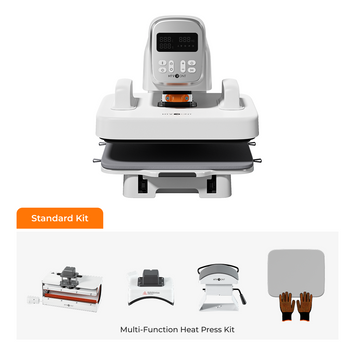
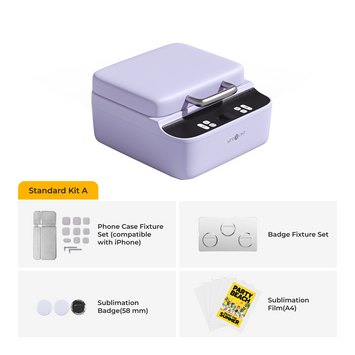
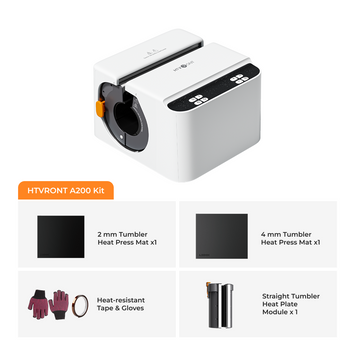
A good‑quality heat press, such as HTVRONT, is always worth the investment. If you haven't invested in one yet, don't let that discourage you from making HTV crafts. A heat press is not necessary for using heat transfer vinyl; you can still create vinyl projects using a household iron to adhere them to blanks and get quality results — but only if you do it the right way. You will be manually handling everything that is otherwise automated by a heat press machine.
Applying heat transfer vinyl with a household iron is a DIY alternative to using a professional heat press. It requires careful temperature control, firm pressure, and even heat distribution to achieve proper adhesion. If you're new to heat transfer vinyl crafts, this article will introduce you to everything you need to know about applying HTV to materials using a household iron. I'll also share tricks and tips to help you achieve vibrant results and advice on caring for the vinyl design to maintain its quality and longevity.
1. Everything You Need for the Project
Gather these essentials: a household iron, heat transfer vinyl, a sturdy surface, weeding tools, and design software or ready‑made templates.
Iron: A common household appliance.
Fabric: Can be sourced from fabric stores, craft stores, or repurposed from old clothing.
Weeding tools: Fine‑tip tweezers, small knives, or pins work well.
Sturdy surface: A flat surface like a table or floor — avoid padded ironing boards.
Heat‑resistant tape: Available at stationery or craft stores.
Timer: A phone timer or kitchen timer will suffice.
Aluminum foil and Teflon sheet or parchment paper: To protect the iron and fabric.
Heat Transfer Vinyl (HTV): Purchased from online or craft stores. For different HTV types, explore our flocked HTV guide and glitter HTV guide.
Design software: Options include HTVRONT IdeaStudio, Cricut Design Space, Silhouette Studio, Adobe Creative Cloud, or Canva.
Ready‑made designs: Purchase pre‑patterned HTV or download free designs from websites or HTVRONT IdeaStudio.
Optional Tools and Materials
Cutting machine: A specialized machine like the LOKLiK Cutting Machine for precise cutting.
Protective sheets: Teflon sheets, parchment paper, or thin cloth can protect your iron and fabric.
Tips for Sourcing Materials:
Repurpose: Use old clothes, bedsheets, or fabric scraps.
Online Shopping: Consider online retailers for a wider range of HTV and crafting supplies.
Local Craft Stores: Check local stores for HTV, tools, and design supplies.
Free Designs: Explore online resources for free design templates.
2. The Designing Process
Create or customize your design in software, mirror it, cut, and weed — proper preparation ensures a successful transfer.
You can always buy ready‑made designs online. But if you're feeling creative or want a more personal design, you can create your own using design software. For specific cutting and weeding techniques, refer to our weeding guide.
Step 1: Create a Design
To start designing, open the design space and set up a new canvas. Always consider the fabric's size to ensure the design fits perfectly. You can import an image to edit on your canvas as an SVG, PNG, or JPG file. Equally, you can create one from scratch, playing around with the design tools to tweak it until it fits your desired outcome.
Most people forget that the final color is not determined by what is displayed on the software, but by the HTV's color. The colors in the software are only used for preview.
Important: When satisfied with the design, remember to horizontally flip (mirror) it using the "flip" button. Unlike adhesive vinyl, HTV is attached to a carrier sheet — if you forget to flip the design before cutting, the final look after pressing will be inverted horizontally.
Before saving the design for cutting, separate it into different layers if you want different HTV colors, and group everything you want to be cut together. Preview the design placement on the virtual cutting mat, choose the type of vinyl you're cutting, and then send it to the cutting machine.
Step 2: Do a Test Cut
On the cutting machine, set the blade depth, speed and pressure to match the vinyl. For precision, I always like to conduct a test cut and only cut the main vinyl when satisfied. It saves me from unnecessary weeding.
Step 3: Print and Cut
Place the vinyl on the cutting mat then put it in the vinyl cutter. The shiny side of the HTV (carrier side) should face down and the vinyl layer up. When everything is ready, click "start" to begin cutting.
Step 4: Weeding
Pressing the vinyl immediately after cutting without weeding adheres the entire sheet. You need to peel off all the excess vinyl, leaving only the design. After a proper cut, the lines should be clear even on intricate designs. Scissors are useful for trimming away the excess vinyl.
It's sometimes easy to forget weeding negative spaces, such as in the letter "o," so remember to double‑check everything before applying. Ensure you don't remove any parts that should be included in the design. If they come up, pat them back down and try again.
3. Pre‑preparations
Proper preparation — washing, pre‑ironing, and setting the right temperature — helps avoid common mistakes and ensures strong adhesion.
Proper preparation and setup help avoid common mistakes. I like using these steps to prepare for a seamless application process.
Step 1: Wash and Dry the Fabric
Before you start, everything should be clean and ready. Removing contaminants such as grease, lint, dirt, or dust that would otherwise reduce the adhesive's tack helps the design stay on for longer. Wash the fabric and completely dry it without using any fabric softeners, as the chemicals in them also reduce the tack.
Step 2: Pre‑iron the Fabric
Pre‑ironing smoothens and warms the surface, helping melt the vinyl's adhesion. Set the iron to the appropriate heat settings for the specific fabric. Turn off the steam — we want to avoid any moisture. Glide the iron over the fabric for 10 seconds, removing any wrinkles and residual moisture.
You can also make crease lines on the fabric to aid in positioning the vinyl later by folding it in half and ironing along the top and bottom.
Step 3: Set the Household Iron's Temperature
Since iron‑ons are not meant for crafting, there is no telling precisely how hot a particular setting gets. Set it to the cotton or linen setting (basically the highest one), and turn off the steam if you hadn't already. Leave it for 5 minutes to reach the optimum temperature before pressing. You can tell when the set temperature is reached when the indicator light on the household iron goes off.
Step 4: Prepare the Surface
Using an ironing board for this process is discouraged. It is wobbly and padded, absorbing pressure and heat and resulting in uneven adhesion. Instead, use a flat, sturdy, and heat‑safe surface like a table or countertop. A clean floor, a thick wooden cutting board, or heat‑resistant mats are also viable options.
4. Step‑by‑Step Application
Position the vinyl, cover with a protective sheet, and press firmly in sections for even adhesion.
Step 1: Place the Vinyl on the Fabric
Position the vinyl on the fabric with the shiny side (carrier sheet) facing up, and the matte or dull side (adhesive side) facing down against the material. If you need it centrally positioned, fold the carrier sheet in half (the design's ends touching) and make small crease marks. Then match the marks with those previously made on the fabric during pre‑ironing. I prefer using the "four‑finger" rule for shirts — simply position the design four fingers down from the neckline. Secure it using heat‑resistant tape to prevent it from moving around when pressing.
Step 2: Cover with a Protective Layer
Iron‑ons have uneven heat distribution, which is probably the biggest downside when using them compared to a heat press. Place a Teflon sheet or parchment paper on top of the HTV. For even better results, place a piece of aluminum foil with the shiny side up between the HTV and the protective sheet to prevent heat from escaping. This protective layer protects everything from sticking and melting and also helps distribute heat evenly. A budget‑friendly alternative is a thin piece of cotton fabric or a silicone baking mat. Avoid using wax paper or polyester sheets — they melt under high heat and could easily ruin your project.
Step 3: Press and Repeat
When pressing, don't move the household iron in a traditional manner (gliding it back and forth). Instead, use it like a heat press: firmly press in one position, then lift and switch to a different section. Apply enough pressure using both hands if possible.
Use your phone's stopwatch app, setting the timer to 30 seconds per press. Repeat pressing until you have covered the entire design. Press for an additional 5 seconds at the edges, especially with intricate designs, to prevent the vinyl from peeling.
For extra security, apply some heat on the flip side of the fabric to cover any spots that hadn't received enough heat for proper adherence.
5. Remove the Carrier Sheet
Whether to hot peel or cold peel depends on the HTV type. Follow the manufacturer's instructions for best results.
Whether you should do a cold or warm peel entirely depends on the HTV type. Manufacturers indicate this information on the HTV's packaging, so remember to check before peeling.
For hot peels, wait until the carrier sheet is warm to peel. For a cold peel, everything needs to be completely cool before peeling. If you notice some vinyl parts on the carrier sheet after peeling, reapply the Teflon sheet and press the area again.
6. Best Tips for Using a Household Iron
Manage temperature, allow proper curing time, and follow layering best practices for professional results.
Managing Temperature and Ironing Techniques
Do not start pressing until the indicator light on the iron turns off. This ensures the optimum temperature needed for adhering the vinyl. For accurate readings, invest in an infrared thermometer to check the iron plate's temperature.
Allow Enough Time to Cure
Always wait for at least 24 hours for the vinyl to set and fully bond with the fabric before washing for long‑term durability. Use cold water when washing, after turning the shirt inside out to prevent agitating the vinyl. If possible, opt for air drying instead of machine or tumble drying.
Layering Vinyl with a Household Iron
It's okay to layer HTV when using iron‑on, but it has to be compatible and layerable. I recommend layering regular HTVs on top of specialty HTVs because the latter requires extra heat (they're thicker) and it might damage the regular HTV when it's placed under it.
Applying Vinyl to Non‑Fabric Blanks
Although this is a bit trickier than applying vinyl on fabrics, you can still achieve great results on non‑fabric blanks such as wood, metal, glass, and ceramic. However, the HTV should be specifically made for hard surfaces. Since some non‑fabric surfaces are more sensitive to heat than others, it's good to test pressing on a small area first before pressing on the main blank.
7. Troubleshooting the Most Common Problems
Quick fixes for common issues — poor adhesion, lifting edges, and bubbles.
The Vinyl Not Adhering Properly
This is almost always due to inadequate heat, pressure, or pressing time. To fix it, ensure you are using the right temperatures (cotton/linen), and firmly press for 30 seconds. The HTV you are using should also be compatible with the blank if you are working with non‑fabrics.
Edges Lifting After Application
Any part of the vinyl lifts if the adhesive has not fully activated and bonded with the material. If the HTV and the material are compatible, the problem can be easily solved by repressing, following the manufacturer's settings recommendations. To avoid any lifting after a good application, wait for the adhesive to fully cure before washing.
Bubbles Appearing on the Vinyl
This is caused by trapped air between the HTV and the material, usually because of uneven heat application. You can press these air pockets using a weeding tool, careful not to damage the vinyl, then press the area flat using iron‑on.
✓ HTV with Iron — Quick Checklist
□ Mirror the design before cutting
□ Wash and dry the fabric without fabric softener
□ Pre‑iron to remove moisture and wrinkles (steam off)
□ Set iron to cotton/linen setting (highest heat)
□ Use a sturdy surface — avoid ironing boards
□ Position vinyl with carrier sheet facing up
□ Secure with heat‑resistant tape
□ Cover with Teflon sheet (and foil for better heat distribution)
□ Press firmly for 30 seconds per section — no sliding
□ Follow the recommended peel method (hot or cold)
□ Wait 24 hours before washing
Frequently Asked Questions
Quick answers to the most common questions about applying HTV with a household iron.
Can I use a household iron instead of a heat press for HTV?
Yes — a household iron can work, but it requires more care and attention. Use the highest heat setting (cotton/linen), turn off the steam, press firmly for 30 seconds per section without sliding, and use a Teflon sheet. For consistent results, a heat press is still recommended.
Why is my HTV not sticking with a household iron?
This is usually due to insufficient heat, pressure, or time. Ensure your iron is at the highest setting, press firmly for at least 30 seconds per section, and pre‑iron the fabric to remove moisture. Also check that your HTV is compatible with the fabric type.
Can I layer HTV with a household iron?
Yes — but use layerable HTV and place regular HTV on top of specialty HTV (like flock or glitter). Specialty HTVs require more heat and can damage thinner regular HTV if placed underneath. Press each layer separately.
How do I prevent bubbles when using an iron for HTV?
Bubbles are caused by trapped air or uneven pressure. Use a Teflon sheet and press firmly without sliding. Start from the center and work outward. If bubbles appear, gently press them with a weeding tool and re‑press the area.
Can I use an ironing board for HTV application?
Not recommended. Ironing boards are padded and absorb pressure, leading to uneven adhesion. Use a flat, sturdy, heat‑safe surface like a table, countertop, or wooden cutting board.
Final Thoughts
Applying heat transfer vinyl with a household iron is a great way to get started with HTV crafts without investing in expensive equipment. While it requires more care and attention than using a heat press, the results can be just as impressive when done correctly.
Remember: mirror your design, pre‑iron the fabric, use the highest heat setting, press firmly without sliding, and wait 24 hours before washing. With practice, you'll be creating professional‑looking HTV designs right from your home.


 Cart Unlocks Add-On Deals