Introduction
One of the most common questions we hear from new crafters is "Can I use adhesive vinyl on shirts?" It's a fair question — adhesive vinyl and heat transfer vinyl look similar on the roll, come in similar colors, and even share the word "vinyl." But they're engineered for completely different surfaces, and using the wrong one will lead to disappointing results.
This guide breaks down what each material is for, why adhesive vinyl doesn't belong on fabric, and how to confidently choose the right vinyl for every project. If you're brand new to all of this, our beginner's guide to vinyl crafts will give you a solid foundation first.
📚 Table of Contents
What Is Adhesive Vinyl?
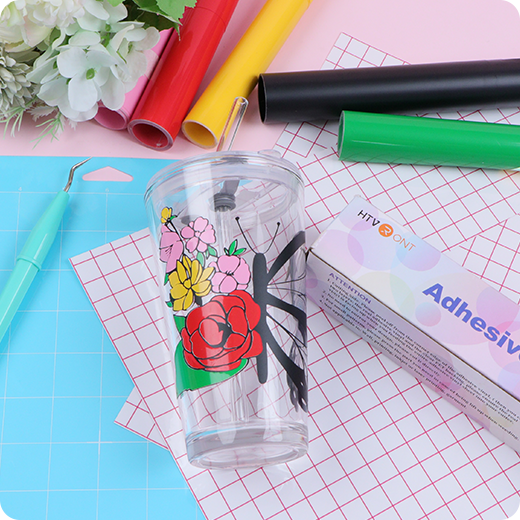
Adhesive vinyl is a sticker-like material with a pressure-sensitive backing that sticks to smooth, hard surfaces when you peel and press it into place. It's available in a wide range of colors, finishes, and textures — including matte, glossy, glitter, and holographic varieties. Unlike heat transfer vinyl, adhesive vinyl requires no heat to apply. You just peel it from its backing, position it, and burnish it down.
It's a fantastic material for hard goods: mugs, glassware, laptops, phone cases, signs, car windows, and more. But as you'll see in the next section, it has a big limitation — and that limitation is fabric.
Can I Use Adhesive Vinyl on Shirts?
No — adhesive vinyl is not designed for shirts or any fabric surface. While it may temporarily stick to a T-shirt, it will peel off quickly, especially after washing or even during normal wear. The adhesive backing simply doesn't bond with fabric fibers the way it bonds with smooth, non-porous surfaces.
Here's the key difference: adhesive vinyl sits on top of a surface, while heat transfer vinyl becomes part of the fabric. HTV uses heat and pressure to embed into the fibers, creating a bond that withstands washing, stretching, and daily wear. Adhesive vinyl, by contrast, relies on surface-level adhesion — and fabric's textured, flexible nature breaks that bond almost immediately.
So if you're making a custom T-shirt, a tote bag, a hoodie, or anything else that will be washed or worn, skip the adhesive vinyl and reach for heat transfer vinyl instead.
What Type of Vinyl Is Best for Shirts?
For fabric projects, heat transfer vinyl (HTV) is the only choice that makes sense. HTV is specifically engineered to bond with textiles under heat and pressure, creating a durable finish that survives dozens of washes — often outlasting the garment itself. It works beautifully on shirts, hoodies, tote bags, pillowcases, caps, and any other fabric you can press.
One of the best things about HTV is the creative range it offers. You can choose from:
-
Standard HTV — the everyday workhorse, available in smooth and matte finishes
-
Glitter HTV — adds sparkle and texture
-
Holographic HTV — iridescent shimmer that shifts with light
-
Metallic HTV — reflective foil-like shine
-
Chameleon HTV — color-shifting finish for eye-catching designs
-
Flocked HTV — soft, fuzzy texture for vintage-style looks
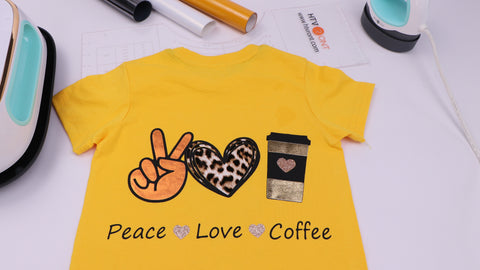
For details on cutting and pressing HTV, our vinyl cutting and heat transfer settings guide covers the exact temperatures, times, and pressures for every HTVRONT material.
What Can You Make with Adhesive Vinyl?
Adhesive vinyl shines on smooth, hard surfaces where its pressure-sensitive backing can form a strong, lasting bond. If your project involves fabric, skip adhesive vinyl — but for just about anything else, it's incredibly versatile.
Here are the surfaces where adhesive vinyl performs best, along with recommendations for permanent vs. removable options:
| Surface |
Permanent or Removable? |
Notes |
| Mugs & Cups |
Permanent |
Withstands hand-washing; avoid dishwashers for longest life |
| Glass & Mirrors |
Permanent |
Adheres firmly to clean, smooth glass |
| Metal |
Permanent or removable |
Great for signs, storage jars, toolboxes |
| Plastic |
Depends on use |
Test first — plastics vary in texture and flexibility |
| Ceramics |
Permanent |
Similar to glass — clean thoroughly before applying |
| Walls & Tiles |
Removable |
Perfect for temporary decor or rented spaces |
Permanent adhesive vinyl generally has a stronger grip and a slightly higher tactile feel than removable vinyl. If you're unsure which to use, ask yourself: "Will this project ever need to come off?" If the answer is no, permanent is usually the safer choice.
Adhesive Vinyl vs. HTV: Side by Side
Both materials have their place — the trick is knowing which one your project calls for. Here's a quick reference:
| Feature |
Adhesive Vinyl |
Heat Transfer Vinyl (HTV) |
| Best For |
Smooth, hard surfaces |
Fabric and textiles |
| Application |
Peel and stick (no heat) |
Heat press or iron required |
| Mirroring Needed? |
No |
Yes — always |
| Washability |
Not washable on fabric; hand-wash only on hard goods |
Machine washable — typically outlasts the garment |
| Typical Projects |
Mugs, signs, car decals, laptop covers |
T-shirts, tote bags, hoodies, caps |
Quick Decision Checklist
Not sure which vinyl to grab? Ask these questions:
- ✅ Is the surface fabric? → Use HTV
- ✅ Will it be washed regularly? → Use HTV
- ✅ Is the surface smooth and hard (glass, metal, plastic)? → Use adhesive vinyl
- ✅ Do you want to remove the design later? → Choose removable adhesive vinyl
- ✅ Does it need to last through washing or outdoor weather? → Permanent adhesive vinyl or HTV
Frequently Asked Questions
What happens if I use adhesive vinyl on a shirt?
The vinyl will peel off — often within the first wear, and definitely after washing. Adhesive vinyl's backing is designed for smooth, non-porous surfaces. Fabric's texture and flexibility prevent a lasting bond. Don't waste your design: use HTV for anything made of fabric.
Do I need to mirror adhesive vinyl?
No. Adhesive vinyl is applied face-up, so mirroring isn't needed. This is a key difference from HTV, which is cut face-down on the carrier sheet and must be mirrored so the design reads correctly after pressing. If you're switching between materials, check your software settings before cutting.
Which adhesive vinyl is best for cups and mugs?
Permanent adhesive vinyl is the best choice for cups and mugs. It provides a stronger bond and is better equipped to handle frequent handling. That said, hand-washing is still recommended — even permanent adhesive vinyl can weaken over time when exposed to dishwasher heat and water pressure. For dishwasher-safe results on drinkware, heat transfer vinyl pressed with a heat press or mug press is the more durable option.
Can I layer adhesive vinyl like HTV?
Yes, but with less flexibility than HTV. You can stack adhesive vinyl layers to create multi-color designs, especially with the help of transfer tape for precise alignment. However, each layer adds thickness, and thick stacks are more prone to edge lifting on curved surfaces. For multi-color fabric designs, layering HTV is the more durable path.
Keep Learning
Now that you know the difference between adhesive and heat transfer vinyl, deepen your skills with these resources:


 Cart Unlocks Add-On Deals