Introduction
Umbrella DIY looks simple—until you remember what an umbrella goes through: rain, wind, constant folding, and friction inside a sleeve or bag. Unlike a cotton T‑shirt, most umbrellas use coated synthetic fabric designed to shed water. That's great for staying dry, but it can be unfriendly to inks and adhesives. This guide breaks down what holds up in real use, why Adhesive Vinyl is usually the safest starting point, and when it makes sense to use a DTF printer and a heat press for small, strategic transfers.
Let's start by understanding exactly what you're decorating—because umbrella fabric behaves very differently from a T‑shirt.
1. What You're Decorating (And Why Umbrellas Behave Differently)
Most umbrella canopies are polyester or nylon, and many are treated with water‑repellent finishes that help water bead and roll off—but also make it harder for adhesives and films to bond. The surface is slightly slick, curved with ribs and seams, and frequently folded, creating repeated stress along fold lines.
These treatments are well documented in textile chemistry research—the Outdoor Industry Association and ZDHC have published extensively on DWR (durable water repellent) chemistry and water‑repellent textile finishes (see References [1]). So "what works on a shirt" doesn't automatically work on an umbrella.
With the surface understood, let's look at what typically goes wrong first—so you can design around the failure points.
2. What Usually Fails First on Umbrellas
If you've ever had a decal look perfect on day one and lift later, you've seen the classic umbrella failure modes: edge lift near ribs, seams, or high‑friction areas; partial bonding from uneven pressure; and cracking along fold lines, especially with larger heat‑applied films. On umbrellas, durability is mostly about placement, size, and edge control.
With the failure points mapped out, here's the method that gives most DIYers the highest success rate.
3. Adhesive Vinyl Is Usually the Best Place to Start
For most DIYers, Adhesive Vinyl (peel‑and‑stick vinyl) is the most reliable umbrella option because it avoids high heat and heavy pressing—two things that can stress coated canopy fabric. The adhesion mechanism of pressure‑sensitive adhesives is well studied and documented in materials science (see References [2]), and surface energy plays a critical role in whether tape bonds properly to a given substrate (see References [3]).
Why It Works Well
- No heat press required
- Great for names, icons, stripes, and clean logos
- Easy to cut with a vinyl cutter
- Reflective options can add meaningful night visibility
Where It Can Struggle
- Extremely slick, highly water‑repellent canopies
- Large solid blocks—stiffer, more edge exposure, more fold stress
A smart umbrella design is usually small‑to‑medium graphics and segmented shapes that flex and fold more easily.
🛠️ Ready to start cutting? Here's what you need:
With the right material chosen, here's the application process that makes the difference between "looks good in photos" and "still looks good after real rain."
4. Step‑by‑Step: How to Apply Adhesive Vinyl to an Umbrella (So It Lasts)
These eight steps are the difference between a decal that survives and one that peels after the first storm: clean the canopy thoroughly, spot test isopropyl alcohol, choose placement away from ribs and seams, use transfer tape, apply from the center outward, press edges firmly, let cure for 24 hours, and start smaller than you think.
-
Clean the canopy with mild soap and water; let it fully dry.
-
Spot test isopropyl alcohol (IPA) on a hidden area, then lightly wipe the application zone.
-
Choose placement away from ribs and seams, ideally on flatter panel areas.
-
Use transfer tape for cut vinyl—especially if you used a vinyl cutter.
-
Apply from the center outward, smoothing with a squeegee to avoid bubbles.
-
Press edges firmly—edge seating is where durability lives.
-
Let it cure (ideally 24 hours) before heavy rain or tight folding.
-
Start smaller than you think; big graphics fail faster on umbrellas.
Adhesive vinyl is straightforward. But what if you want the look of fabric‑bonded graphics instead?
5. What About Heat Transfer Vinyl (HTV)?
Heat transfer vinyl (often called HTV vinyl) is made for fabrics, but it usually expects a stable, flat pressing surface and predictable fabric behavior. Umbrella canopies are neither. HTV can work in limited cases, but it's riskier because coatings may react to heat with shine, stiffness, warping, or bubbling; ribs and seams prevent even pressure; and fold lines fatigue films faster—especially on larger designs.
If you try HTV, keep it small, avoid ribs and seams, and treat it as an experiment—not a guaranteed "set it and forget it."
This caution about size applies even more strongly when heat‑pressing large designs—whether HTV or DTF.
6. Avoid Large Heat‑Pressed Designs on Umbrellas (DTF or HTV)
Umbrellas generally aren't a great candidate for large, full‑panel heat‑pressed graphics—whether you're using DTF or HTV vinyl. Coated or water‑repellent fabric is sensitive to heat and pressure over wide areas, the curved and ribbed canopy makes consistent pressure impossible, and large films cross more fold lines, cracking and lifting faster.
If You Do Need Small Heat‑Pressed Elements: Use a Nimble Heat Press
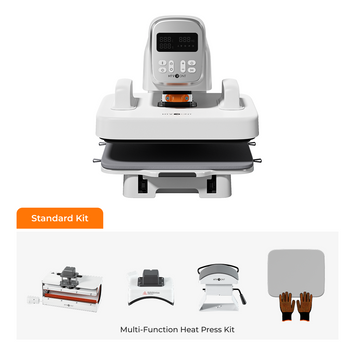
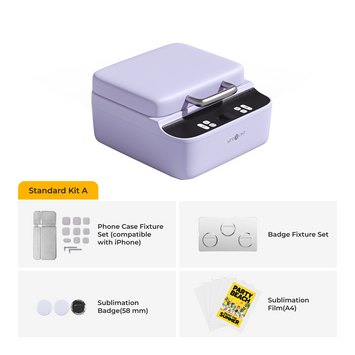
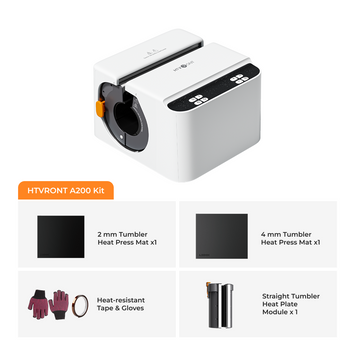
Small transfers—a badge, corner logo, or initials—are the sweet spot for heat application on umbrellas. For that kind of work, a compact tool like the HTVRONT H1 Mini Heat Press can be a very appropriate choice: it's more flexible and maneuverable around ribs and seams, better suited to small zones on a non‑traditional, non‑flat surface, and lets you treat umbrella pressing like precision work. No matter what heat press you use, work on the flattest area you can, avoid ribs and seams, and do a quick spot test for coating sensitivity before committing.
Small and strategic is the rule. Now let's look at when DTF makes sense for those small transfers.
7. Using a DTF Printer on Umbrellas: When It Makes Sense
DTF is popular because it delivers sharp detail and full color. With a DTF printer, you print onto film, then use a heat press to transfer the design. DTF is most sensible on umbrellas when you need full‑color artwork with gradients, illustrations, or detailed logos, when you can keep the design small and strategically placed, and when you're willing to test first for coating sensitivity.
Practical DTF tips for umbrellas: avoid rib lines and seams completely, don't place key detail on the umbrella's main fold lines, test on a similar coated fabric first, and watch for coating shine or texture changes after pressing. DTF can look fantastic—just don't ask it to behave like a giant, flexible billboard.
🖨️ New to DTF printing? Here's where to start:
Beyond decoration, umbrellas offer a practical safety application that's often overlooked.
8. The Most Underrated Upgrade: Reflective Adhesive Vinyl for Night Visibility
Umbrella DIY doesn't have to be purely aesthetic. In rain and low light, drivers have reduced visibility and more glare. Reflective (retroreflective) vinyl helps because it returns light back toward the source—like headlights—making you more noticeable. Human‑factors and traffic safety research supports retroreflective materials improving nighttime conspicuity when placed effectively (see References [4]–[6]).
Put reflective elements near the umbrella edge for better visibility from multiple angles, use short segmented strips rather than one continuous ring—segments flex better and resist edge lift—and avoid ribs and seams whenever possible. Easy design patterns that look good include "runway dashes" around the perimeter as segmented edge strips, a few clean radial lines from near the top toward the edge, or a small reflective badge with your initials.
9. A Simple "What Should I Use?" Decision Guide
-
Want the highest success rate with minimal gear? Choose Adhesive Vinyl—especially reflective.
-
Want crisp full‑color art and you already own the equipment? Choose DTF using a DTF printer + heat press, kept small and away from stress zones.
-
Want a fabric‑style look and don't mind experimenting? Try heat transfer vinyl, but expect more trial‑and‑error on coated canopies.
References
Frequently Asked Questions
Can I use regular stickers on an umbrella?
Regular paper stickers will not hold up. They lack the water resistance and adhesive strength needed for coated synthetic fabric. You need permanent adhesive vinyl specifically designed for outdoor use. Even then, surface preparation—cleaning and degreasing the application area—is critical for adhesion on water‑repellent canopy materials.
Why does my vinyl decal peel off after a few uses?
Peeling is almost always caused by one of three things: the canopy surface wasn't properly cleaned before application, the decal was placed too close to a rib or seam where flexing breaks the adhesive bond, or the design is too large and crosses multiple fold lines. Smaller, segmented designs placed on flatter panel areas consistently last longer.
Can I use a regular heat press for DTF transfers on umbrellas?
A regular flat heat press can work for small DTF transfers, but it's challenging because the umbrella's ribs and curved surface prevent even pressure. A compact tool like the H1 Mini Heat Press gives you more control for navigating around ribs and seams. Always test on a similar coated fabric first, and keep the design small and away from stress zones.
Is reflective vinyl actually worth it for safety?
Yes. Research in traffic safety and human factors consistently shows that retroreflective materials significantly improve nighttime visibility and conspicuity. Placing reflective elements near the umbrella's edge, using segmented strips rather than continuous rings, and keeping them on the flattest panel areas maximizes both durability and effectiveness.


 Cart Unlocks Add-On Deals