Introduction
A DTF setup often starts with one simple goal: print a design and put it on a shirt. Then reality shows up—powder, curing, humidity, and the occasional "Why did this peel off after one wash?" moment. So the question comes up fast: Do you have to buy a DTF Oven to use a DTF printer? Not strictly. But once you understand what's happening on the film during a DTF heat transfer, it becomes clear why a DTF Oven is so commonly recommended: it's the most reliable way to turn "powder on ink" into a true, press‑ready adhesive layer. Here's the full process and why curing matters so much.
Let's start with the complete workflow—because understanding each step reveals exactly where curing fits and why it's not optional if you want reliable results.
The Full DTF Heat Transfer Workflow (And What's Missing at First)
A proper DTF heat transfer isn't just "print and press." It's a step‑by‑step build of layers: printing creates the ink layer, powdering adds raw adhesive particles, and curing melts those particles into a smooth, uniform glue layer that can actually bond to fabric.
1. Print the Design: Film + Ink, but No Glue Yet
You start by printing your artwork on PET film with a DTF printer. At this point, the printed DTF film consists of the film base layer (PET carrier) and the image/ink layer (DTF ink). What it does not have yet is a functional adhesive layer. Without that, the design cannot properly bond to the substrate during transfer. If you tried to apply a heat press right now, you're asking "ink on film" to magically stick to fabric—and it won't hold.
2. Apply DTF Powder: The Earliest Form of an Adhesive Layer
Next, you apply DTF powder to the printed area. This is where the "glue layer" begins—but initially it's a raw, granular layer. Powder particles cling to the wet, tacky ink, and you now have the earliest form of an adhesive layer. But it's still particle‑based, not a smooth film.
3. Cure the Powdered Film: Particles Must Melt Into a Real Glue Layer
Because the powder is granular, going straight to transfer can trigger a chain reaction of issues. If you press a powdered—not properly cured—film too early, you can run into problems such as the image shifting or distorting as powder moves under heat and pressure, rough edges and poor detail especially on fine lines, weak bonding that peels more easily, and higher risk of wash failure because the bond is mechanically and chemically less stable. This is exactly why curing is so important at this stage.
📖 Want a step‑by‑step walkthrough of the complete DTF process?
With the workflow mapped out, let's zoom in on the curing step itself—and why a dedicated oven solves two problems at once.
What a DTF Oven Really Does (Two Critical Jobs)
A DTF Oven isn't just a fancy heater—it solves two specific technical problems that show up right after powdering: melting granular powder into a continuous adhesive layer, and reducing moisture in the ink layer to prevent steam‑related defects during pressing.
Job #1: Melt Granular Powder Into a Continuous Adhesive Layer
Curing applies controlled heat so those powder particles fuse and level out, becoming a true adhesive layer that can bond cleanly during transfer. This is the difference between "powder stuck to wet ink"—which is unstable, gritty, and inconsistent—and "a uniform glue layer" that is stable, press‑ready, and consistent.
Job #2: Reduce Moisture in the DTF Ink Layer
DTF inks are typically water‑based. After printing, the ink layer contains moisture. Curing helps drive down that moisture so that during heat pressing you're not fighting steam‑related bubbling, inconsistent adhesion, or a transfer that looks fine initially but fails later. The DTF Oven improves both adhesive formation and ink‑layer stability—two things directly tied to durability.
🛒 Ready to explore DTF Oven options?
-
Browse DTF Ovens – Explore our collection of dedicated DTF curing ovens designed for consistent, reliable results.
So an oven is ideal—but what if you're not ready to invest in one yet?
Can a Heat Press Replace a DTF Oven? Yes—Sometimes, as a Workaround
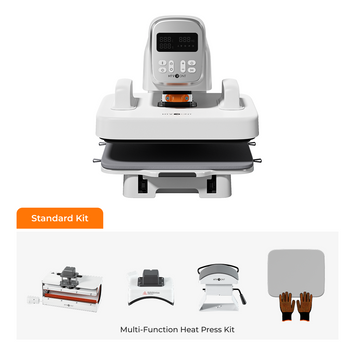
If you're not buying a DTF Oven right away, one commonly discussed alternative is curing with a heat press. It works as a starting point for small batches and testing, but it introduces more variability, lower throughput, and a higher risk of over‑ or under‑curing compared to a purpose‑built oven.
When Heat‑Press Curing Makes Sense
- You're starting out and want to keep upfront costs low
- You're running small batches where a slower workflow is acceptable
- You're still testing film, powder, and ink combinations and dialing in a baseline process
Why It's Not the Same as Using a DTF Oven
-
Lower throughput: your heat press becomes both your curing station and your transfer station
-
More variability: placement, heat distribution, and timing differences can affect cure quality
-
Easier to over‑ or under‑cure: which can lead to lifting edges, grainy texture, tackiness, or reduced wash durability
A heat press can be a reasonable substitute in early stages, but it usually takes more attention and produces less consistent results than a purpose‑built DTF Oven. For a detailed walkthrough of this method, our guide on how to cure DTF powder with a heat press covers the complete step‑by‑step process.
📖 Want to understand the full DTF powder workflow?
Where the Transfer Goes After Curing (And What It's Used On)
Once the film is properly cured, you complete the transfer with a heat press onto common substrates like T‑shirts, hoodies, canvas tote bags, and hats. With a well‑cured adhesive layer, the design bonds reliably and holds up far better under wear and washing.
Frequently Asked Questions
Do I absolutely need a DTF oven to start DTF printing?
No, it's not mandatory for day one. You can start by curing with a heat press as a workaround, especially if you're testing the process or running small batches. However, a dedicated DTF oven provides more consistent, repeatable results and becomes increasingly valuable as your production volume grows.
What happens if I skip the curing step entirely?
Skipping curing means the adhesive powder remains granular rather than forming a smooth, continuous glue layer. This leads to weak bonding, rough edges, poor wash durability, and a much higher likelihood of the design peeling off. Curing isn't optional—it's the step that transforms powder into a functional adhesive.
Can I use a regular kitchen oven for DTF curing?
It's not recommended. Kitchen ovens have less precise temperature control, can have hot spots that cause uneven curing, and should never be used for both food and sublimation or DTF materials due to potential chemical residue. A dedicated DTF oven or heat press is a safer, more reliable choice.
How do I know if my DTF film is properly cured?
A properly cured DTF film has a smooth, slightly glossy surface on the powder‑coated side. If it looks grainy, matte, or you can still see individual powder particles, the curing is incomplete. Under‑cured transfers typically fail at the edges first and have noticeably weaker wash durability.
Practical Takeaway: Not Mandatory for Day One, but Key for Consistency
So, do you have to buy a DTF Oven to use a DTF printer? You can start without one, especially if you use a heat press curing method as a workaround. But the underlying physics of DTF doesn't change: right after printing, your film has no true glue layer; after powdering, that "glue" is still granular; and curing is what turns it into a stable, uniform adhesive layer while also reducing moisture in the ink layer. That's why a DTF Oven is so often the upgrade that transforms DTF from "it works sometimes" into "it works every time."


 Cart Unlocks Add-On Deals