Introduction
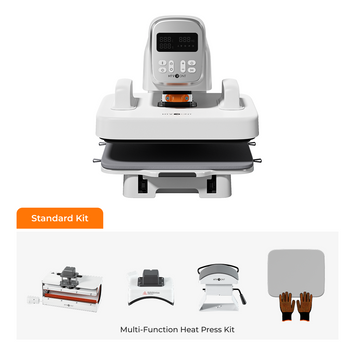
So, what can you use DTF printing on? The short answer is: a surprisingly wide range of products—but only when the material can handle heat, the surface can be pressed evenly, and the finished print matches the item's real‑world wear conditions. DTF (Direct‑to‑Film) printing has earned its reputation as a go‑to decoration method because it's both high quality and broadly compatible with cotton, polyester, blends, and many other fabrics. In practice, DTF is a two‑part workflow: your DTF Printer creates the transfer on film, and a Heat Press applies it to the product with controlled temperature, time, and pressure. If you're mainly producing garments, a T‑shirt press (flat platen press) is typically the most efficient setup—while curved or hard‑to‑press items may require specialty attachments or different platens. Below is a practical, product‑by‑product guide covering hats, apparel, shoes, pet scarves, and more—plus a clear compatibility checklist you can apply to anything else you're considering.
Before diving into specific products, let's establish the three filters that determine whether any item is a good DTF candidate.
The DTF Compatibility Checklist (Use This Before You Press)
Before you commit to a product, run it through three production‑minded filters: heat tolerance, pressability, and real‑world wear. If it passes all three, it's usually worth sampling.
1. Heat Tolerance
DTF requires heat and dwell time to properly bond. If the substrate softens, warps, bubbles, or melts under heat, it's a poor candidate. Watch out for low‑temp plastics, some coated synthetics, heat‑sensitive foams, and certain adhesives and laminations.
2. Pressability (Flatness + Pressure)
DTF adhesion depends on consistent contact and pressure. Curves, thick seams, raised stitching, and hardware create pressure gaps—often leading to edge lift. Rule of thumb: if you can't press it evenly on your Heat Press, you can't expect it to last evenly in real use.
3. Real‑World Wear (Wash, Friction, Stretch)
A print can look perfect when it comes off the press and still fail in real life if it lives in a high‑abuse zone. Consider high wash frequency items like workwear and kids' clothing, high abrasion zones like shoes and bag bottoms, and high stretch applications like performance apparel and leggings.
📖 New to DTF printing? Start with the fundamentals:
With the checklist in mind, let's start with hats—a strong category when you approach it correctly.
Hats: A Great Match—As Long as You Press the Shape Correctly
Hats are a strong DTF category for clean logos and small graphics. Typical hat fabrics—cotton, polyester, blends—are generally DTF‑friendly, and the small decoration area makes bonding easier. The challenge is the curved surface, which requires purpose‑built tooling for consistent results.
Curved crowns require purpose‑built tooling. A flat T‑shirt press can work in some cases, but a cap press or hat attachment usually delivers more consistent edges. Avoid thick seams, heavily textured panels, and areas close to the brim where pressure becomes inconsistent. Keep designs compact and simple—curved surfaces amplify any press unevenness. Best use cases include front logo placements, small side badges, and simple typography.
From hats to the most reliable category of all—apparel, where DTF truly shines.
Apparel: The Most Reliable and Scalable DTF Application
If you want the highest success rate with the least drama, start with apparel. DTF performs well on T‑shirts, hoodies, sweatshirts, aprons, uniforms, and many blended fabrics—compatible with cotton, polyester, and blends, and supporting bold color, gradients, and fine detail.
For stretch‑heavy garments, DTF can work, but large solid fills may feel heavier and show stress sooner—smaller designs and smarter negative space often wear better. For high‑wash items like workwear and kids' clothing, durability depends on consistent pressing and good finishing. Moderate‑size artwork with smooth edges is usually more forgiving than thin spiky shapes. Best use cases include left‑chest logos, full front and back prints, branded uniforms, creator merch, and event apparel—typically produced efficiently on a T‑shirt press with repeatable settings.
Apparel is straightforward. Shoes, on the other hand, require a different mindset entirely.
Shoes: Possible, But Material and Placement Matter More Than Anything
Shoes are where DTF stops being "plug‑and‑play" and becomes a controlled experiment. That doesn't mean it's not worth doing—just that you should approach shoes with testing and realistic expectations, starting with small logos on flatter zones like canvas uppers, tongues, and side panels.
Where DTF tends to work better: canvas uppers, some leather and PU surfaces after heat‑response testing, and flatter zones like the tongue or side panels. Where DTF tends to struggle: toe caps and heel areas with high flex and abrasion, deep textures or heavily perforated materials where inconsistent contact leads to weak edges, and zones that constantly rub where prints get worn down over time. To improve success, start with small logos or text instead of large panels, use rounded corners in artwork to reduce edge lift, and always sample first—shoe materials vary too much to rely on assumptions, even if the transfer came out perfectly from your DTF Printer. Best use cases include small branding elements, limited‑edition accents, and low‑wear decorative zones.
From high‑wear shoes to a surprisingly versatile category—pet accessories.
Pet Scarves: Excellent for Customization—Prioritize Comfort and Safety
Pet scarves and many bandanas are strong DTF candidates because they're typically made from apparel‑like fabrics. The common fibers are usually compatible, and print areas are generally small, making pressure and bonding easier to control.
Product‑specific cautions: avoid placing prints where pets will chew, scratch, or rub constantly. Don't overbuild the design—large, dense prints can feel stiffer and reduce comfort. Think practically: pet items get handled a lot, so clean finishing and reliable bonding matter. Best use cases include names, icons, seasonal graphics, and small brand marks.
Beyond these four categories, the checklist opens up a wide range of additional products you can use DTF printing on.
What Else Can You Use DTF Printing On? (Quick Expansion List)
Once you understand the checklist, you can confidently expand into additional product lines—especially soft goods that behave like garments: pressable, heat‑tolerant, and not constantly abraded.
Strong Candidates
- Tote bags, canvas bags, drawstring bags
- Aprons and light workwear accessories
- Pillow covers and fabric organizers
- Some backpack panels (flat areas, minimal seams)
Candidates That Require Extra Testing
- Socks and highly elastic accessories (stretch + wash stress)
- Textured towels (terry loops can soften fine detail)
- Coated or water‑resistant fabrics (adhesion can vary widely)
Frequently Asked Questions
Can DTF be used on 100% cotton?
Yes. DTF works on cotton, polyester, blends, and many other fabrics. Unlike sublimation, DTF doesn't require polyester or a polymer coating to bond. This broad compatibility is one of its biggest advantages over other decoration methods.
What surfaces should I avoid with DTF?
Avoid materials that can't handle heat—low‑temp plastics, some coated synthetics, heat‑sensitive foams. Also avoid surfaces where you can't apply even pressure, like heavily textured areas, thick seams, or zones with hardware. If the material warps under heat or you can't press it flat, DTF will struggle.
How does DTF hold up on items that get washed frequently?
When properly pressed and cured, DTF transfers can withstand 50+ washes without significant fading or peeling. Durability depends on consistent pressing temperature, time, and pressure—plus proper care. Wash items inside out in cold water and avoid high‑heat drying for the longest‑lasting results.
Can I use the same heat press for all DTF applications?
A flat platen press works well for most apparel and flat items. For curved items like hats, a cap press or hat attachment is recommended. For shoes and irregularly shaped items, you may need specialty platens or attachments. The key is consistent, even pressure—if your press can't deliver that, the transfer won't last.
Practical Takeaways (What Pros Do Differently)
If you want DTF results that don't just "look good today" but also hold up over time, focus on three repeatable habits: pick placement strategically—low‑friction zones last longer; design for wear—avoid unnecessary giant solid blocks and use cleaner shapes with smarter negative space; and test before you scale—especially for shoes, coated materials, and unusual substrates. DTF is versatile—but your product choice, placement, and process discipline determine whether it performs like a premium decoration method or a short‑lived novelty.


 Cart Unlocks Add-On Deals