Introduction
Mixing Puff vinyl with regular heat transfer vinyl (HTV) can look incredible—crisp details from standard HTV plus that bold, raised finish from puff. The trick is that these two materials don't like being treated the same way. If you press everything "all at once" with high heat, heavy pressure, and a long dwell time, you'll often end up with flattened puff, melted edges, or layers that lift later. A more reliable approach is to think like a builder: set the base first, then let the puff do its final expansion last. Below is a practical, repeatable method that works well on most garments and with most heat press or T‑shirt press setups.
Let's start by understanding why these two materials demand different approaches from the very first press.
1. Why Puff Vinyl and Regular HTV Need Different Pressing Strategies
Regular heat transfer vinyl is designed to melt and bond cleanly into fabric under steady heat and pressure—it rewards thorough pressing. Puff vinyl is engineered to expand when heated, which creates the 3D look but makes it sensitive to too much pressure that squashes the texture, too much heat that blurs edges, and too much time that leads to uneven puffing or a tougher surface.
That's why combo designs work best when you lock in regular HTV first, then finish with puff at the end.
With the physics clear, your artwork decisions are what determine whether the final press looks premium—or messy.
2. Design & Layer Planning: The Part That Determines Your Success
Before you even turn on your T‑shirt press, three design rules set you up for success: favor side‑by‑side layouts over heavy stacking, put fine detail in regular HTV and bold shapes in puff, and keep layers to two—three max—with puff always as the top layer and final press.
Favor "Side‑by‑Side" Layouts Over Heavy Stacking
The most reliable combo designs use butt‑joined or puzzle‑fit pieces with puff next to regular HTV, and minimal overlap if needed—just a tiny 1–2 mm overlap for clean seams. Avoid large areas where puff sits on top of regular HTV. Puff expands upward, and that expansion can tug at lower layers or create inconsistent pressure zones.
Put Fine Detail in Regular HTV, Bold Shapes in Puff
Puff expands and can "eat" small detail. Small text, thin strokes, and sharp corners belong in heat transfer vinyl. Bold letters, chunky shapes, and simple icons belong in Puff vinyl.
Keep Layers to 2 (3 Max, If You Must)
More layers usually means worse hand feel—stiffer and thicker—and more edge‑lift risk over time. If you're stacking, puff should almost always be the top layer and the final press.
🎨 Want to master puff vinyl design before you cut?
Design locked in. Now a few minutes of prep will save you from the most common failures.
3. Prep Steps That Make Pressing More Consistent
Three quick prep habits dramatically improve results: pre‑press the garment for 3–5 seconds to remove moisture and flatten wrinkles, use heat‑resistant tape to hold combo designs in place during multi‑step pressing, and always use a cover sheet—parchment or Teflon—to reduce press marks and protect the vinyl surface.
Prepped and ready. Here's the pressing sequence that makes combo designs work.
4. The Recommended Method: The "2 + 1 Press" Workflow
Think of this as a template: base press the regular HTV at 60–80% of its recommended time to tack it down securely, place the puff vinyl as the top layer, then do the final press according to puff's recommended time with medium‑low pressure and a cover sheet. This staged approach anchors the base layer while giving puff the room it needs to expand properly.
Step 1: Base Press the Regular HTV (a "Partial Press")
Goal: tack it down securely without overcooking the entire stack. Use the recommended temperature for your regular HTV, press for about 60%–80% of the recommended time, and use medium pressure. This anchors the layer and keeps it from shifting, while leaving room for a clean final press later.
Step 2: Place the Puff Vinyl (Top Layer)
Lay puff as the final layer. Make sure the garment is smooth and you're not pressing over bulky seams, hems, or pockets—pressure won't be even there.
Step 3: Final Press to Activate the Puff
This is the press that creates the 3D look. Press according to puff's recommended time, use medium‑low pressure—too much can flatten the puff—and use a cover sheet for protection and cleaner results. After this press, you should see a noticeable raised, "puffed" texture.
Main presses done. But what about that one corner that's still lifting?
5. Touch‑Up Pressing: Use a Mini Heat Press for Edges (Don't Re‑Press the Whole Shirt)
A common scenario: the design looks great, the puff is nicely raised, but one corner or edge is slightly lifting. The biggest mistake is putting the entire shirt back in a big heat press for a long, heavy re‑press—that's how you crush puff texture or leave shiny press marks. Instead, use a Mini heat press for precision touch‑ups.
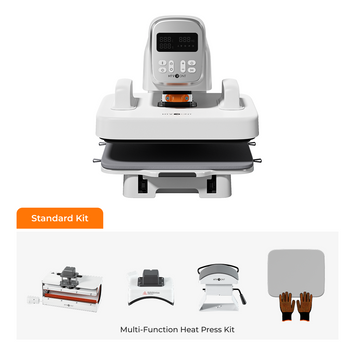
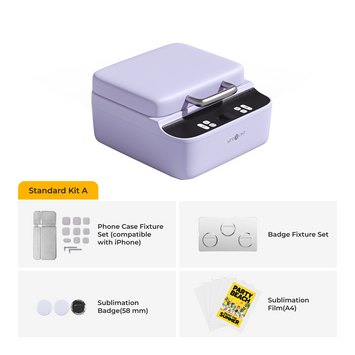
Focus only on the lifting edge—avoid pressing the full puff area. Press in short bursts of 1–2 seconds at a time, use light pressure to bond the edge without flattening the texture, and keep using a cover sheet to protect the vinyl surface. This spot‑fix method is safer for puff and gives you better control than a full re‑press on a T‑shirt press.
6. Quick Troubleshooting for the Most Common Failures
Puff Looks Flat or Underwhelming
-
Likely causes: pressure too high, too many re‑presses, or incorrect dwell time
-
Fix: reduce pressure, follow puff timing closely, and do touch‑ups with a Mini heat press
Puff Edges Look Blurry or "Melted"
-
Likely causes: temperature too high or pressing too long
-
Fix: lower temperature slightly or shorten time; move fine detail to regular heat transfer vinyl
Regular HTV Starts Lifting
-
Likely causes: the base press was too short or stacking/overlap is too aggressive
-
Fix: increase Step 1 closer to 80% of the recommended time; redesign to side‑by‑side pieces
You See Press Marks or Shine
-
Likely causes: too much pressure or no cover sheet
-
Fix: use a cover sheet, reduce pressure, and avoid long re‑presses
Frequently Asked Questions
Can I press puff vinyl and regular HTV at the same time?
Not recommended. Puff vinyl needs specific conditions—medium‑low pressure and precise timing—to expand properly, while regular HTV benefits from thorough, steady pressing for maximum adhesion. Pressing them together usually means compromising one material's ideal settings. The staged "2 + 1 Press" approach gives each material what it needs.
What's the ideal pressure for the final puff press?
Medium‑low pressure is the sweet spot. You want enough contact to bond the adhesive without crushing the raised texture. If you're seeing press marks or flat puff, your pressure is too high. A cover sheet also helps distribute pressure more evenly and protect the vinyl surface.
How many layers can I safely stack with puff vinyl?
Two layers is the safest recommendation—regular HTV as the base, puff as the top. Three layers is possible but increases stiffness and edge‑lift risk. Beyond three layers, the hand feel becomes noticeably thick, and the risk of adhesion failure rises significantly. If your design requires multiple colors, consider side‑by‑side placement rather than stacking.
Can I use a household iron instead of a heat press for layered designs?
Not recommended for layered puff and HTV designs. A household iron can't provide the even pressure and consistent temperature needed for reliable multi‑step pressing. The "2 + 1 Press" workflow depends on controlled, repeatable conditions—especially the medium‑low pressure for the puff activation step. Use a proper heat press or T‑shirt press for best results.
7. The Simple "Combo Vinyl" Rule to Remember
- Regular HTV first, Puff vinyl last
- Let puff expand—don't crush it with pressure
- Use your T‑shirt press for the main presses
- Use a Mini heat press for careful touch‑ups
When you treat combo designs as a staged process—base bonding first, puff activation last—you'll get cleaner edges, better durability, and that raised puff effect that's actually worth showing off.


 Cart Unlocks Add-On Deals