Introduction
Making creative baby bibs with a heat press is one of those rare DIY projects that's equal parts practical and adorable. With the right materials and a few reliable steps, you can create bibs that look store‑bought, hold up to constant washing, and still feel soft enough for everyday wear. Here's a clear, repeatable process using a Heat Press (or T‑shirt press), a vinyl cutter, Teflon sheets, and optional puff vinyl for extra dimension.
Before you even power on the press, your material choices will decide whether the final bib feels comfy or ends up stiff and scratchy.
Choose Baby‑Friendly Bibs and Heat‑Transfer Materials
The right bib fabric and vinyl type make all the difference. Smooth cotton or cotton‑blend bibs provide the best surface for adhesion, while standard HTV handles names and icons beautifully—and puff vinyl adds a raised, dimensional accent that's perfect for initials and bold shapes.
Pick the Right Bib Fabric
For baby bibs, 100% cotton is soft, breathable, and gentle on skin. Cotton blends are often a bit more durable and easier to care for. Two‑layer bibs are great if the back layer is more absorbent for drool control. Try to avoid heavily textured or super thick bibs when you're starting out—smooth fabric surfaces make it easier to get clean, consistent adhesion.
Select the Best Vinyl for Bib Projects
For bibs, heat‑transfer vinyl is usually the most dependable option because it's designed to bond with fabric and survive laundry. Standard HTV (heat transfer vinyl) is ideal for names, icons, and simple graphics. Puff vinyl adds a raised, "puffy" effect that looks amazing on initials, small shapes, and bold lettering. A quick design tip: puff vinyl works best with thicker lines and simple shapes—very thin details can look uneven after it expands.
🎨 Want to explore puff vinyl design techniques?
With materials chosen, let's gather the tools that make the process smooth and repeatable.
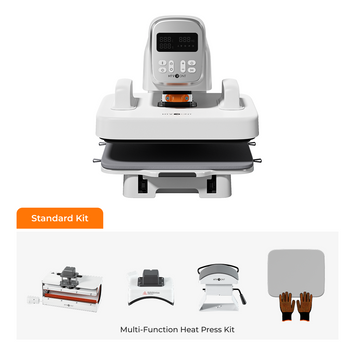
You don't need a huge studio—just a few essentials: a heat press or T‑shirt press for reliable bonding, a vinyl cutter for precise designs, weeding tools to remove excess vinyl, Teflon sheets to protect the bib and prevent sticking, a lint roller for surface prep, and optionally a small pressing pillow or folded towel to level seams and snaps.
Tools gathered. Now for the workflow that keeps results consistent—especially when making multiple bibs.
Step‑by‑Step: Pressing a Creative Bib Design
This five‑step workflow keeps things consistent: design with bib scale in mind, cut with a vinyl cutter, pre‑press to remove moisture and flatten fibers, position and press with a Teflon sheet for protection, then peel according to your vinyl's instructions and do a quick finishing press to seal edges.
1. Design with Bib Scale in Mind
Bibs are small, so keep the design clean and readable. Names usually look best when they're not overly tall. Simple icons—stars, hearts, animals, or minimal shapes—photograph well. Keep designs away from thick seams, edging, or snap areas when possible. A good rule: if it looks slightly "too simple" on your screen, it often looks perfect on the bib.
2. Cut Your Design with a Vinyl Cutter
Load your vinyl and cut the design. If you're using HTV, you'll typically cut from the carrier side and weed after cutting. Do a small test cut first—saving one minute here can prevent wasting a whole sheet.
3. Pre‑Press the Bib
Place the bib on the press and do a short pre‑press of a few seconds. This helps remove moisture, flatten wrinkles, and improve adhesion consistency. This step is boring in the best way—it prevents future headaches.
4. Position the Design and Press
Place the design where you want it, then cover it with Teflon sheets before pressing. The Teflon protects the fabric surface, prevents vinyl from sticking to the upper platen, and helps reduce "shine" or press marks on certain fabrics. Press settings depend on your vinyl brand, so follow the manufacturer's temperature and time recommendations. Use firm, even pressure—consistent pressure is often more important than "pressing harder."
5. Peel and Do a Quick Finishing Press
Peel according to your vinyl's instructions—some are warm peel, some are cool peel. After peeling, do a short finishing press with a Teflon sheet on top to help seal edges and improve wash durability. If you're using puff vinyl, be especially careful here: too much time or pressure can flatten the puff effect. A hot peel is the better approach for puff.
With the basic workflow mastered, here are some design ideas that make bibs feel custom and gift‑worthy.
Creative Ideas That Look Great on Baby Bibs
You don't need complicated artwork to make something that feels custom. Personalized name bibs with a small icon are timeless and easy to repeat for sets. Seasonal mini‑collections—spring flowers, summer sunshine, fall pumpkins, winter snowflakes—create a cohesive look when you keep the same font and layout. And puff vinyl accents like a single large initial, a bold short word, or a chunky icon add dimension without clutter.
Care Tips: Keep Bibs Looking New Longer
Bibs get washed a lot, so care instructions matter. Let the design cure for about 24 hours before the first wash, wash inside out on a gentle cycle, skip high heat when possible—air‑drying is kinder to both fabric and vinyl—and never iron directly on the design. If needed, cover with a Teflon sheet and use light pressure.
🧺 Want a complete care guide for printed items?
Frequently Asked Questions
What type of vinyl is safest for baby bibs?
Standard HTV and puff vinyl are both safe choices for baby bibs when applied correctly. Look for CPSIA‑compliant vinyl that's certified safe for children's products. The vinyl bonds to the fabric surface and doesn't come into direct contact with the baby's skin when worn. Always follow the manufacturer's safety guidelines for the specific vinyl you're using.
How do I prevent the design from peeling after washing?
Three things make the biggest difference: let the design cure for about 24 hours before the first wash to allow the adhesive to fully set, always wash inside out on a gentle cycle with cold water, and air‑dry when possible—high heat from dryers is the #1 cause of premature peeling on bibs that get washed frequently.
Can I use a regular iron instead of a heat press for baby bibs?
A household iron can work for small, simple HTV designs, but it lacks the even heat distribution and consistent pressure of a dedicated heat press. Bibs have seams, snaps, and small surface areas that benefit from the controlled, even pressure a heat press provides. For professional‑looking, long‑lasting results, a heat press or T‑shirt press is strongly recommended.
What's the best bib fabric for heat transfer vinyl?
Smooth 100% cotton or cotton‑blend bibs work best. Avoid heavily textured fabrics like terry cloth, which create an uneven surface that prevents full vinyl contact. Pre‑pressing for a few seconds before applying the design also helps by removing moisture and flattening fibers for better adhesion.
The Real Secret: Consistency Beats Complexity
If you use a vinyl cutter for clean shapes, a steady Heat Press (or T‑shirt press) for reliable bonding, and Teflon sheets to protect your work, you'll end up with bibs that look polished and last through real‑life use. Add puff vinyl for a little "wow" factor on initials or icons, and you've got creative baby bibs that feel custom, durable, and genuinely fun to make.

 Cart Unlocks Add-On Deals