Hat Press 101: Your Go-To Guide from Beginner to Pro
Written by HTVRONT
|
Published on
|
Modified on
|
Reading time for 11 min
Table of Contents
Hey everyone, Tim here! Today's guide is gonna walk you through everything about hat heat presses. Whether you're looking to DIY some cool custom hats, start a small biz making personalized caps, or just curious about how these things work, you've come to the right place! I'm gonna keep it real simple, no fancy jargon — let's dive right in!
Why does this matter in 2026? The global headwear market is absolutely booming right now. According to industry data, the global headwear market was valued at around $37 billion in 2025 and is projected to reach nearly $63 billion by 2033, growing at a CAGR of 6.9%. The U.S. headwear market alone was valued at $7.8 billion in 2025 and is projected to reach $12.7 billion by 2033. Meanwhile, data shows that the custom headwear segment alone generated $502 million in online sales in 2025, with revenue expected to grow by 20-50% in 2026. What's driving all this growth? A massive shift toward personalization and self-expression — consumers don't just want a hat anymore; they want their hat.
Custom hat design is also one of the highest-margin product categories in print-on-demand right now, with 40-60% profit margins and far less competition than t-shirts. Hats are unisex, seasonal-proof, and they double as both fashion accessories and branding tools — corporate clients, sports teams, wedding parties, and small businesses all need them. In other words: there's never been a better time to get into custom hats.
And here's a little secret: hat embroidery is taking off even faster. Embroidery on hats — from 3D puff lettering to tonal thread-on-thread designs — is one of the fastest-growing segments in the custom headwear space. In fact, leather patches and embroidered details are dominating 2026 hat trends. While we're focusing on heat transfer today, HTVRONT is developing a 15-needle embroidery machine specifically designed for hat embroidery — stay tuned for that later this year! 👀
What's a Hat Heat Press Anyway?
Basically, it's a magical gadget designed to "iron-on" designs onto hats! Using heat and pressure, it firmly sticks materials like transfer paper and heat transfer vinyl (HTV) onto your cap.
Unlike a regular iron, it has a curved platen that perfectly fits the hat's shape, preventing crooked designs or burnt fabric. Whether you're working with a classic baseball cap, a bucket hat, or a cowboy hat, the right hat press makes all the difference. A hat press cradles the hat in place while the heating element wraps around the curved surface, applying even heat and pressure across every inch of your design.
🔥 Fun fact: Hat heat presses have become a staple in small-batch custom apparel businesses because they require minimal space and investment — yet they can produce professional-quality results in under a minute per hat. With the custom headwear market expected to grow 20-50% in 2026, more and more crafters are jumping in.
📖 Want to learn more? Check out our complete guide: What is a Hat Heat Press [2026] for a deep dive into the technology behind these machines.
Can I Use a Regular Heat Press for Hats?
Answer: Nope, don't even try it!
⚠️ Why it won't work: Regular heat presses have flat platens, and hats are curved. If you force it, your design will end up a blurry mess, or your hat will get all warped. You gotta use a special hat heat press with a curved platen — or get a hat attachment for a regular one.
Trust me, I've seen crafters ruin perfectly good hats by trying to use a flat press. The curved platen isn't a marketing gimmick — it's a functional necessity. The heat needs to reach the entire design surface evenly, and only a curved platen can do that on a hat's rounded shape.
3 Types of Hat Heat Press + Price Breakdown
There are three main types of hat heat presses on the market. Find your match and pick the one that suits you best!
The custom headwear market is seeing a surge in home-based and small-batch production, making hat heat presses more popular than ever. The cap heat press market is projected to grow at a CAGR of 6.4% through 2033, with the market expected to reach $719.7 million. Demand for personalized gifts has driven 25% of consumer heat press demand, with the hat and cap pressing niche accounting for around 8% of specialty presses(DataIntelo). Here's what you need to know about each type:
Type
Principle
Pros
Cons
Price Range
Best For
Handheld
Manually move heating plate to iron
Cheap, portable, easy to store
Tricky to press small designs evenly
$80-$150
Home DIY enthusiasts
Manual
Manually press down lever for pressure
Adjustable pressure, large platen
Bulky, takes effort to operate
$110-$140
Small studios / Start-up beginners
Automatic
One-button start for auto pressure
Effortless, efficient, large platen
Slightly pricier, pressure not adjustable
$120-$140
Custom businesses / Bulk production
HTVRONT Recommended Models:
HTVRONT Manual Hat Press — Designed for simplicity and efficiency. Its compact size fits easily into any workspace, and the ergonomic handle ensures a smooth pressing experience. Perfect for beginners or anyone looking for a straightforward, budget-friendly solution. Compatible with baseball caps, bucket hats, and more. Heats evenly, consistent results, highly affordable.
HTVRONT A300 Auto Hat Press — Launched in November 2025, this fully automatic model is designed for consistent, repeatable results with minimal manual effort. One-touch operation enables fully automated pressing — just press the button and let the machine do the work. Features adjustable temperature settings (104°F to 410°F) and a smart design that ensures even heating, making it suitable for trucker hats, cowboy hats, and more. Ideal for professionals or advanced crafters seeking efficiency and precision.
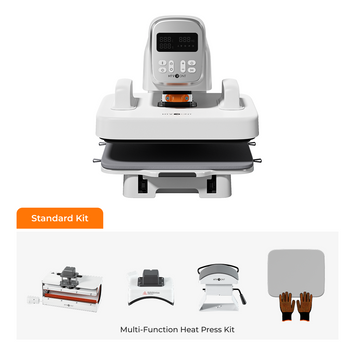
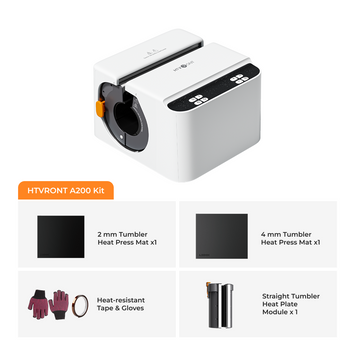
HTVRONT A100 Auto Multi Heat Press — An intelligent, fully automatic 3-in-1 heat press with a tool-free quick-swap design that lets you switch between flat press, hat press, and tumbler press modules — all in one machine. The large hat heat plate is designed to fit most standard baseball caps, trucker hats, and bucket hats (adult hat sizes 7-8 recommended). Whether you're pressing T-shirts, hats, or tumblers, the A100 does it all. Perfect for crafters who want maximum versatility without buying multiple machines.
📦 Stock Status: To ensure you receive your heat press promptly, we have paused pre-orders for hat presses. If you see the "Add to cart" button, the product is in stock and can be shipped immediately after purchase. If it shows "Sold out", the product is temporarily out of stock (currently in production) — you may need to wait until it becomes available again.
💡 Tim's Two Cents:
For occasional home use, handheld is okay, but don't try complex designs.
If you're starting a business, go straight for automatic — save time and energy.
Students or those on a budget, manual is your best bet, just make sure to get one with adjustable pressure!
If you want one machine that does everything — T-shirts, hats, and tumblers — the A100 3-in-1 is the ultimate choice.
Zero-Fail Operation Guide (Using HTVRONT as an Example)
Power On & Preheat: Press the power button → default temp is 100℃/20 seconds → press "set" to adjust parameters → wait for the red light to turn green (preheating done). For the A300, you can set temperature between 104°F and 410°F, and time from 1 to 999 seconds.
Secure the Hat: Slide the hat vertically onto the platen pad, make sure it's snug and wrinkle-free.
Place Design Material: Peel off the HTV backing sheet, place the design face down on the hat → secure edges with heat-resistant tape → cover with a Teflon sheet.
Press Time!: Press and hold the power button for 2 seconds → machine auto-counts down → "beep" sound means it's finished.
Peel & Cool: Peel off the transfer paper while it's still warm! Check if edges are firmly attached after it cools down.
For Bucket Hat, Cowboy Hat or Small Size Caps:
First: Put the Ironing Mat inside the hat, and unfasten the buckle (if there is one).
Then: Place your hat and ironing mat on top of the hat pressing lid and keep it steady.
📖 Need more detailed instructions?
👉 Check out the Tutorial Guide for A300 Hat Heat Press for a complete walkthrough of the A300's features, temperature settings, and step-by-step instructions.
Before pressing the handle, tighten the suction cup at the bottom to prevent the machine from tipping (tabletop must be flat!).
Pressure Adjustment: Gently press down the handle → rotate the pressure knob until the platen is snug against the hat.
Temperature & Material Settings Cheat Sheet
HTVRONT Official Parameter Chart — Copy these settings and you can't go wrong.
These temperature and time guidelines are based on HTVRONT's official testing and real-world use. Always test on a scrap piece first — every hat material and HTV brand can behave differently. For most standard HTV, 150°C (305°F) is a good starting point.
Material Type
Temperature / Time
Pressure
Peel Type
Best Use Cases
Regular HTV / Chameleon HTV
145℃, 15 sec
High
Cold Peel
Simple Logos / Text
Metallic HTV
140℃, 10 sec
High
Cold Peel
Cool Reflective Designs
Glitter / Holographic HTV
150℃, 15 sec
High
Cold Peel
Glow-in-the-dark Party Hats
Flocked HTV
155℃, 15 sec
High
Hot Peel
3D Embossed Effects
Dark Transfer Paper
160℃, 20 sec
High
Cold Peel
Color Designs on Cotton Hats
Sublimation Paper (Polyester)
200℃, 40 sec
High
Hot Peel
Photo-Quality Realistic Prints
General Rule of Thumb:
Cotton Hats: Lower temp (140-160℃), longer time (15-20 sec)
Synthetic / Blends: Higher temp (200℃+), longer time (40 sec+)
Sublimation on hats: Requires a minimum of 50% polyester content for the ink to bond properly. Temperature typically 195-205°C (385-400°F) for 40-60 seconds.
Special Materials (like rhinestones/leather): Test first! Otherwise, you'll totally mess up!
Is the hat fully in contact with the platen? Use clips to secure edges.
Pressure not enough? Increase pressure and make sure the platen is snug against the hat.
Wrong temperature? Re-set according to the chart above — different HTV materials need different temperatures.
Q2: Machine base lifts up when pressing?
Two likely causes:
Uneven tabletop! Switch to a hard, flat surface — avoid soft pads or fabric.
Suction cup not tightened. Rotate the suction cup base clockwise firmly.
Q3: Creases appear after pressing?
Check these two things:
Too much pressure! Especially for hats with thicker sponge lining — reduce pressure and try again.
Time too long. Reduce time by 5 seconds, let it cool before peeling.
Q4: What kind of decorations can I press?
Here are your main options:
HTV: Basic, great for simple designs and text.
Sublimation Paper: Photo-quality results, but only works on synthetic fabrics (minimum 50% polyester).
DTF Film: Works on all fabrics, vibrant colors (slightly higher cost).
Leather Patches: Need high heat to activate the adhesive, instantly elevates the look! Leather patch demand has grown 45% from 2024 to 2026 — it's the fastest-growing segment of the custom hat market.
Q5: My design looks faded after pressing — what went wrong?
Fading usually means:
Temperature too low — the HTV adhesive didn't fully activate. Increase by 5-10℃ and try again.
Press time too short — add 3-5 seconds to your press time.
Uneven pressure — make sure the hat is positioned evenly on the platen.
Worn-out transfer paper — check the expiration date on your materials.
💡 Always run a test press on a scrap hat before doing your final project!
Creative Ways to Level Up Your Hat Game
Multi-Position Designs: Not just the front! Sides, back, brim — get creative everywhere. Try names on the side, small icons on the brim, or a repeated pattern around the band.
Material Mix-and-Match: HTV + rhinestones (press HTV first, then add rhinestones after cooling), flocked HTV + embroidery patches (layering for a killer textured look). With embroidery dominating 2026 hat trends — from 3D puff lettering to tonal thread-on-thread designs — combining heat transfer with embroidered elements is a great way to stand out.
Old Hat Makeovers: Use a covering film to hide the old logo, press on a new design — instant hat upgrade! This is a great way to refresh old inventory or upcycle thrifted hats.
While heat transfer is an amazing way to customize hats, embroidery is taking the custom headwear world by storm. The global embroidered apparel market is valued at $5.8 billion in 2025 and is projected to reach $8.7 billion by 2034, growing at a CAGR of 5.2%.
HTVRONT is currently developing a 15-needle embroidery machine specifically designed for hat embroidery — capable of handling structured caps, dad hats, and everything in between. Stay tuned for the official launch later this year! 🚀
Safety Precautions (Life-Saving Guide)
Always wear heat-resistant gloves! The platen can get hot enough to fry an egg.
Don't adjust anything while the machine is working, wait until it cools down.
Clean the platen with a damp cloth + alcohol, don't use knives to scrape!
Keep the machine away from flammable materials — paper, fabric scraps, and powders can ignite.
Unplug when not in use. Safety first, always.
Conclusion
A hat heat press is seriously a "small investment, big creativity" kinda tool. Whether for personal use or starting a side hustle, pick the right machine + master these tips, and you'll be cranking out jaw-dropping designs in no time!
And remember: this is just the beginning. The custom headwear market is growing fast — from $502 million in online sales in 2025 to an expected 20-50% growth in 2026. Hats carry 40-60% profit margins with far less competition than t-shirts. Whether you're doing heat transfer now or planning to move into embroidery later, there's a massive opportunity waiting.
Ready to press? Go make some magic! 🧢🔥
(This article's data is based on the HTVRONT official manual, real-world testing of multiple models, and industry market research. Safety first, don't cry if you mess up~)
✅ Quick Checklist: Before You Press Your Next Hat
Choose the right hat press type — handheld, manual, automatic, or 3-in-1 A100?
Set the correct temperature & time — check the cheat sheet above for your material
Secure the hat firmly — wrinkle-free and snug on the platen
Use a Teflon sheet — protect your design and the platen
Know your peel type — hot peel vs. cold peel, check the chart
Test first! — always test on a scrap hat before your final project


 Cart Unlocks Add-On Deals