Printing a design on a T‑shirt looks easy—until you wear it all day, wash it a few times, and realize that “great image quality” can come with trade-offs like stiffness, reduced breathability, or extra setup time. Screen printing, DTF, DTG, and tie‑dye can all create impressive results, but they differ in comfort, design complexity, durability, and the tools required.
This guide keeps the focus practical: how each method feels on a real shirt, what kinds of artwork it supports, and what you’ll realistically need to get consistent outcomes.
🧭 A Simple Mental Model: Where Does the Design Live?
Most of the differences come down to one question: does the design sit on top of the fabric, or become part of it?
Screen printing pushes ink through a stencil and leaves an ink layer on the surface.
DTF (direct‑to‑film printing) prints onto film first, then bonds the graphic onto the shirt using heat and adhesive.
DTG (direct‑to‑garment) prints ink directly onto the garment and is commonly discussed within digital textile printing.
Once you know where the design ends up, you can usually predict the shirt’s hand feel, breathability, and how “forgiving” the process will be.
🖨️ Screen Printing: Best for Bold, Simple Graphics (Not for Highly Complex Color Variation)
Screen printing is a classic for a reason: it’s durable, scalable, and great for crisp logos and bold shapes. The standard overview of the technique is well captured in the general description of screen printing.
How it feels
Screen printing commonly creates a noticeable print “hand,” especially on large filled areas. Small prints can feel light, but big solid blocks may feel thicker and less breathable.
Ink choice matters here. For instance, plastisol inks tend to sit on top of the fabric and can feel heavier when coverage is large.
What it’s good at—and what it’s not
Screen printing excels at:
1–4 color logos
typography and bold graphic shapes
consistent, repeatable production runs
But it’s not the most practical choice for designs that are overly complex with many colors and frequent color transitions—think photo-like gradients or highly detailed, multi-color illustrations. Each additional color typically increases setup steps and alignment effort, which raises cost and the chance of registration issues.
Gradients can be simulated using halftone patterns, but that’s a more advanced workflow and still not as straightforward as modern full-color digital methods for highly variable color art.
🎞️ DTF (Direct‑to‑Film): Vivid, Complex Full Color—But You’ll Need the Right Hardware
If your artwork is color-rich—vibrant illustrations, complex shading, lots of transitions, or photo-like detail—DTF is often the most reliable path to “what you see on screen is what you get.” The basic workflow is described in the general definition of direct‑to‑film printing.
How it feels
DTF typically feels like a thin bonded layer on the shirt. Well-made transfers can be flexible, but compared with dyeing (or some DTG results), DTF more often has a mild “transfer feel,” especially for large designs.
Why it shines for complex, vivid designs
DTF is naturally strong at:
vivid saturation and crisp detail
gradients and smooth color transitions
multi-color designs that would be expensive or difficult to separate into screens
This directly matches your key point: DTF can handle complex, lively, color-changing artwork that screen printing often struggles to produce efficiently.
The equipment reality (including your keyword)
To produce DTF consistently at home or in a small studio, you’ll typically need a dtf printer—not just a general office printer—plus the matching film/adhesive workflow and controlled curing and pressing.
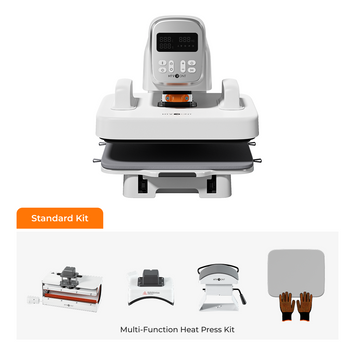
And because the final step is bonding the transfer onto the shirt, most setups rely on a heat press. Many creators also call this a t shirt press in everyday usage—same idea, just a more apparel-specific way of saying it. The press step is where durability is often won or lost: the right temperature, pressure, and time make a big difference.
A common practical approach is:
outsource DTF transfers when you only make occasional shirts,
invest in a dtf printer and a repeatable press workflow when you produce frequently.
🧵 DTG: Detailed Prints With a Softer, More Fabric‑Integrated Feel (Especially on Cotton)
DTG is often chosen by people who want full color but prefer a softer feel than many transfer-based approaches. It sits within the broader ecosystem of digital textile printing and is widely used for small-batch apparel printing.
How it feels
On suitable cotton shirts, DTG can feel comparatively soft and breathable, especially on light garments. On dark garments, pretreatment and underbases can add some feel, so process control matters.
What it’s best for
DTG is a strong fit for:
photos and complex illustrations
gradients and painterly artwork
one-offs and small runs where setup time matters
Like DTF, DTG also depends on correct curing; many shops use controlled curing equipment, and some workflows may still use pressing steps for finishing, though DTG isn’t primarily a transfer-bonding method like DTF.
🌈 Tie‑Dye: Maximum Comfort and Uniqueness (Precision Not Included)
Tie‑dye is the most “fabric-first” option here: you’re not adding a layer, you’re changing the fibers’ color. The concept is covered in tie‑dye and its relationship to resist dyeing.
How it feels
Because there’s typically no print layer, tie‑dye usually keeps the shirt’s original softness and breathability.
What it’s best for
Tie‑dye is ideal for:
organic gradients, spirals, cloud and burst patterns
vintage/retro aesthetics
one-of-one pieces where variation is a feature, not a bug
It’s not the method for sharp logos, small text, or exact edges.
📊 Quick Comparison: The Practical Snapshot
Here’s the fast decision map.
Method
Feel & Breathability
Design Strength
Difficulty
Best Use
Screen Printing
Medium; can feel thicker with large coverage
Bold, limited-color graphics
Med–High
Batch runs, logos
DTF
Transfer layer; less breathable in print area
Vivid, complex full color
Low–Med (hardware commitment)
Detailed art, small batches
DTG
Often softer on cotton
Photos, gradients, high detail
Medium
Premium one-offs
Tie‑Dye
Softest; most breathable
Organic patterns
Low–Med
Handmade unique pieces
✅ Practical Recommendations (Fast and Honest)
Printing lots of shirts with bold logos and simple palettes? Choose screen printing. Avoid it for highly complex, multi-color, constantly changing designs unless you’re prepared for extra cost and process complexity.
Want vivid, lively, color-rich artwork with gradients and detail? Choose DTF. For in-house production, expect to need a dtf printer and a reliable heat press / t shirt press workflow.
Want full color but prioritize softness and a more “printed into the fabric” feel? Choose DTG, especially on cotton.
Want maximum comfort and true handmade uniqueness? Choose tie‑dye.
🔬 A Credible Testing Anchor (Wash Durability / Colorfastness)
If you want a truly authoritative reference for how prints are evaluated for laundering performance, AATCC publishes widely used textile test methods (for example, accelerated laundering/colorfastness procedures). Their official standards catalog is here: https://members.aatcc.org/store/
These kinds of standards are helpful when you want to support statements like “durability depends heavily on curing/press settings and process control,” without turning your article into a lab report.


 Cart Unlocks Add-On Deals





![10 Father's Day DIY Ideas [2026] Make Some Gear With Your Old Man](http://www.htvront.com/cdn/shop/articles/img-1780972656757_350x350.webp?v=1780975024)


![10 Father's Day DIY Ideas [2026] Make Some Gear With Your Old Man](http://www.htvront.com/cdn/shop/articles/img-1780972656757_542x.webp?v=1780975024)


