Can You Heat Press Polyester? A Professional Guide
Polyester is one of the most widely used synthetic fabrics in the world, valued for its durability, versatility, and cost-effectiveness. However, due to its heat sensitivity, many people are hesitant to use heat press techniques on polyester for fear of damaging the material. If you're wondering, "Can you heat press polyester?" the answer is yes, but it requires a careful approach and specific techniques to ensure success. In this professional guide, we'll explore the properties of polyester, the heat press process, and the best practices for achieving high-quality results without compromising the integrity of the fabric.
Understanding Polyester and Its Heat Sensitivity
Polyester is a synthetic fiber derived from petroleum-based materials. It is lightweight, wrinkle-resistant, and retains its shape well, making it a popular choice for apparel, home textiles, and industrial applications. However, polyester is sensitive to high temperatures due to its chemical structure. Its melting point is approximately 482°F (260°C), but the fabric can begin to warp, melt, or discolor at much lower temperatures, typically around 300°F. This sensitivity means that heat pressing polyester requires precise control over temperature, pressure, and time.
Different types of polyester fabric also react differently to heat. For example, thin polyester sportswear fabric is more heat‑sensitive than thicker polyester canvas. Brushed polyester (like fleece) can develop shiny press marks if too much pressure is applied. Always check the care label on your specific garment and, when in doubt, test on an inconspicuous area first.
Is Heat Pressing Polyester Possible?
The short answer is yes, but there are some critical considerations. Unlike natural fibers like cotton, polyester cannot withstand high temperatures. As a result, using traditional heat press settings can lead to damaged fabric. However, when the right temperature, pressure, and time are used, heat pressing polyester is not only possible but can also yield excellent results.
Key Considerations for Heat Pressing Polyester
To successfully heat press polyester, it's essential to follow these guidelines:
1. Use the Right Heat Transfer Material
Not all heat transfer vinyl (HTV) or transfer paper is suitable for polyester. Some materials are specifically designed to work on synthetic fabrics at lower temperatures. For example:
-
Low-Temperature HTV: Products like EasyWeed Stretch or other low-temperature HTVs are ideal for polyester.
-
Sublimation Printing: Polyester is particularly compatible with sublimation printing, as the dye bonds chemically with the synthetic fibers, resulting in vibrant and durable designs.
2. Control the Temperature
For most heat transfer projects using HTV or transfer paper, the recommended temperature range for heat pressing polyester is 270°F to 300°F (130°C to 150°C). Temperatures exceeding this range may cause the fabric to melt, discolor, or develop shiny marks. Always refer to the manufacturer's guidelines for both the fabric and the transfer material to determine the optimal temperature. (Note: sublimation uses higher temperatures — we'll cover that separately below.)
3. Adjust Pressure and Time
Polyester typically requires light to medium pressure and a pressing time of 10 to 15 seconds. Too much pressure or an extended pressing time can cause damage, such as scorching or visible press marks. If you notice shiny spots after pressing, try reducing the pressure on your next attempt.
4. Use a High-Quality Heat Press Machine
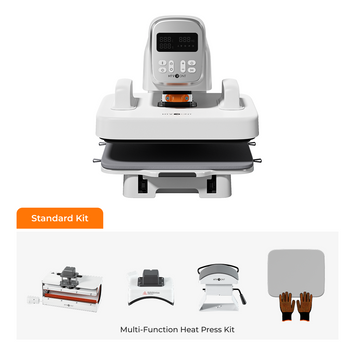
A reliable heat press machine with adjustable temperature, pressure, and time settings is essential for working with polyester. Using an iron is not recommended, as it does not provide consistent heat or pressure. For a complete overview of heat press options, see our guide on what is a heat press.
5. Protect the Fabric
To prevent scorching or shiny marks on the polyester, always use a protective layer, such as a Teflon sheet, parchment paper, or a thin cotton cloth, between the heat press and the fabric. A Teflon sheet is the most reliable option — it distributes heat evenly and prevents the upper platen from leaving marks on delicate polyester surfaces. Not sure which protective layer to use for your specific project? Our guide on when to use a Teflon sheet covers the best scenarios for each type.
6. Perform a Test Press
Before applying the design to the final product, always test your heat press settings on a scrap piece of polyester fabric. This allows you to fine-tune your approach and avoid costly mistakes.
7. Apply the Design
Once the heat press settings are adjusted, position your design on the polyester garment. Cover the design with the protective layer and press for the recommended time. After pressing, let the garment cool slightly before peeling off the transfer material, following the manufacturer's instructions for a hot peel or cold peel.
Polyester vs. Other Fabrics: Heat Press Comparison
Wondering how polyester stacks up against other common fabrics? Here's a quick-reference comparison to help you understand the key differences:
| Fabric |
Recommended Temperature |
Press Time |
Key Precaution |
| Polyester |
270–300°F (130–150°C) |
10–15 seconds |
Use protective sheet to prevent shiny marks |
| Cotton |
300–320°F (150–160°C) |
10–15 seconds |
Pre-press to remove moisture |
| Cotton-Poly Blends |
290–310°F (145–155°C) |
10–12 seconds |
Test first — blends vary by ratio |
| Nylon |
270–280°F (130–140°C) |
8–10 seconds |
Very heat-sensitive; use low-temp HTV |
| Leather (Genuine) |
250–270°F (120–130°C) |
5–8 seconds |
Minimal moisture; short press time |
As you can see, polyester sits in the middle of the temperature spectrum — more heat-tolerant than nylon or leather, but more sensitive than cotton. If you work with multiple fabric types, keeping a chart like this near your heat press can save you from costly mistakes.
Step-by-Step Guide to Heat Pressing Polyester
Prepare Your Materials:
Ensure the polyester fabric is clean, wrinkle-free, and free of any dirt or oils that might interfere with adhesion.
Set the Heat Press:
Adjust the heat press to the recommended temperature (270°F to 300°F), pressure (light to medium), and time (10 to 15 seconds). Refer to your transfer material's specifications for precise settings. For a full list of heat press parameters, visit our heat press settings guide.
Preheat the Fabric:
Preheat the polyester fabric for 3 to 5 seconds to remove any moisture or wrinkles. This helps the transfer material adhere more effectively.
Position the Design:
Place the heat transfer vinyl or transfer paper onto the desired area of the fabric. Use heat-resistant tape if necessary to hold the design in place.
Add a Protective Layer:
Place a Teflon sheet, parchment paper, or a thin cotton cloth over the design to protect the polyester from direct heat.
Perform the Heat Press:
Press the design for the specified time and temperature. Avoid moving the heat press during the process to ensure even pressure.
Peel the Transfer Material:
Depending on the type of transfer material, either peel it off while warm (hot peel) or wait until it cools completely (cold peel). Follow the manufacturer's instructions for best results. For more detail, read our guides on hot peel and cold peel.
Inspect the Finished Product:
Check the design to ensure it has adhered properly and that the fabric has not been damaged. If necessary, adjust the heat press settings and repeat the process with a test piece.
Common Issues and Solutions
1. Scorch Marks or Shiny Spots
-
Cause: Excessive heat or direct contact with the heat press platen.
-
Solution: Lower the temperature by 10–15°F and always use a Teflon sheet or parchment paper between the press and the fabric. If a shiny spot has already appeared, you can sometimes reduce its appearance by pressing again with a Teflon sheet on top for 3–5 seconds at a slightly lower temperature.
2. Peeling or Poor Adhesion
-
Cause: Insufficient heat, pressure, or pressing time.
-
Solution: Double-check the settings for your heat transfer material and ensure even pressure across the entire design. Also, make sure you pre-pressed the fabric to remove moisture — trapped moisture is a common cause of adhesion failure.
3. Wrinkled or Warped Fabric
-
Cause: Overheating or pressing for too long.
-
Solution: Reduce the temperature and pressing time, and avoid reheating the same area multiple times. If the fabric has warped permanently, it usually can't be restored — prevention is key.
4. Design Looks Faded After Washing
-
Cause: The transfer wasn't fully bonded due to insufficient temperature or time, or the garment was washed too soon after pressing.
-
Solution: Wait at least 24 hours before the first wash. When washing, turn the garment inside out and use cold water. For detailed care instructions that apply to both HTV and DTF transfers, see our how to care for DTF shirts and HTV shirts guide.
Why Polyester Is Ideal for Heat Pressing
Despite its sensitivity to heat, polyester is an excellent fabric for heat pressing when handled correctly. Its synthetic fibers bond well with sublimation dyes and sublimation paper, as well as heat transfer materials, resulting in vibrant, long-lasting designs. Additionally, polyester's durability ensures that the applied designs, whether created using sublimation paper or other transfer methods, remain intact even after repeated washing and wear.
For sublimation specifically, polyester is actually the best fabric choice because the dye bonds at a molecular level with the synthetic fibers. While sublimation requires higher temperatures (385–400°F) than standard HTV, this is safe for polyester because the fibers temporarily expand to accept the gaseous dye rather than melting. In the sublimation process, the dye sublimates into a gas and penetrates the molecular structure of the polyester fibers — this process requires high temperatures to be effective, but these temperatures are not sufficient to cause damage to the polyester. As long as the heat is applied evenly with a protective Teflon sheet and the recommended time is followed, the fabric remains intact. This creates a permanent, fade-proof design that can't crack or peel — something you simply can't achieve on cotton with sublimation alone.
Frequently Asked Questions
Why does my polyester fabric get shiny after heat pressing?
Shiny marks occur when the polyester fibers melt slightly due to excessive heat or direct contact with the heat press platen. To prevent this, always use a protective layer like a Teflon sheet and keep the temperature at or below 300°F. If shiny spots appear, try pressing the garment again with a Teflon sheet on top for a few seconds — this can sometimes redistribute the fibers and reduce the shine.
Can I use a regular iron on polyester instead of a heat press?
Technically yes, but it's not recommended. Household irons have inconsistent heat and pressure, which increases the risk of scorching or incomplete adhesion. If you must use an iron, set it to the lowest polyester-friendly temperature, use a pressing cloth, and work on a firm, flat surface — not an ironing board, which absorbs too much pressure.
What's the best HTV for polyester?
Look for low-temperature or "easy-apply" HTV specifically formulated for heat-sensitive fabrics. These products typically press at 270–290°F, well within polyester's safe range. Brands often label these as "Low-Temp" or "Stretch" HTV. Always check the packaging to confirm the recommended temperature before purchasing.
Can I sublimate on polyester?
Yes — in fact, polyester is the ideal fabric for sublimation. The polyester fibers absorb the dye at a molecular level, creating a permanent, vibrant design. For best results, use 100% polyester or a high-polyester blend (at least 65% polyester). The recommended sublimation settings are 385–400°F for 40–60 seconds — significantly hotter than HTV, but safe for the polyester fabric itself because the heat is applied with even pressure and a protective sheet. The polyester fibers briefly expand to accept the gaseous dye rather than melting.
How do I remove heat press marks from polyester?
Minor shiny marks can sometimes be reduced by placing a Teflon sheet over the affected area and pressing again for 3–5 seconds at a slightly lower temperature. For scorch marks, unfortunately, the fibers are permanently damaged and can't be restored. This is why prevention — using the right temperature and a protective layer — is always the best approach. For a deeper dive into caring for your equipment, read our how to clean a heat press guide.
Conclusion
So, can you heat press polyester? Absolutely! With the right tools, techniques, and attention to detail, you can achieve professional-quality results without damaging the fabric. The key is to use the appropriate temperature, pressure, and time settings, as well as to protect the fabric from direct heat. Whether you're customizing sports jerseys, promotional items, or fashionable apparel, mastering the art of heat pressing polyester opens up endless creative possibilities.
By following this professional guide, you can confidently heat press polyester and produce stunning, durable designs that stand the test of time. Happy heat pressing!


 Cart Unlocks Add-On Deals