Cutting Parameters

Written by Tia Isom

|

Published on

|

Modified on

|

Reading time for 1 min

How to Set Up Cutting Parameters?

Before Setting Up:

You can click "Make" to set up the "Mode," "Cutting Mat," "Cutting Parameters," and "Material Parameters". Hover over the mouse on the "?" icon (the "?" is unclickable if not set up) and click "click here" to check the cutting parameters listed below.

Setup Instructions

LOKLiK iCraft:

Material Settings:

Please refer to the chart below for more cutting settings. If you cannot find your material below, try a test cut with a similar material setting. If you cannot cut through the material under maximum pressure, try to cut more times.

Material Chart

Notes:

  • Ensure the blade is in good condition and fastened.

  • Calibrate the cutting force before cutting to find the best cutting force value.

FAQs:

Cannot cut through the material, or the cutting force is too strong?

  • ① Calibrate the cutting force and adjust the cutting parameter to cut again.
  • ② The blade may dull after a long time of use; please replace a new blade and cut again.
  • ③ Ensure the blade is fastened or the blade housing is functional; otherwise, fasten the blade or replace the blade housing.

LOKLiK Crafter:

Blade Instruction:

  • 45° Red Blade: Fine-point blade is suitable for cutting thin materials, including heat transfer vinyl, permanent vinyl, sticker, printable vinyl, etc.
  • 60° Blue Blade: Deep-point blade is suitable for cutting thick materials, including cardstock, chipboard, PVC/mylar stencil sheets, felt, etc.

Cutting Setting Instructions:

  • Cutting Force Value:
    • LOKLiK/HTVRONT: 1.0 - 11.0; the bigger the value, the heavier the force.
    • Other Brands: 100 - 800; ditto.
    • (*Higher value is recommended for thicker materials.)
  • Cutting Speed: 1-10; the higher value means faster speed. (*Lower speed is recommended for thicker materials.)
  • Cutting Passes: 1-10; if you need to cut thick or rigid material, you can try to cut the material twice or more.

Material Settings:

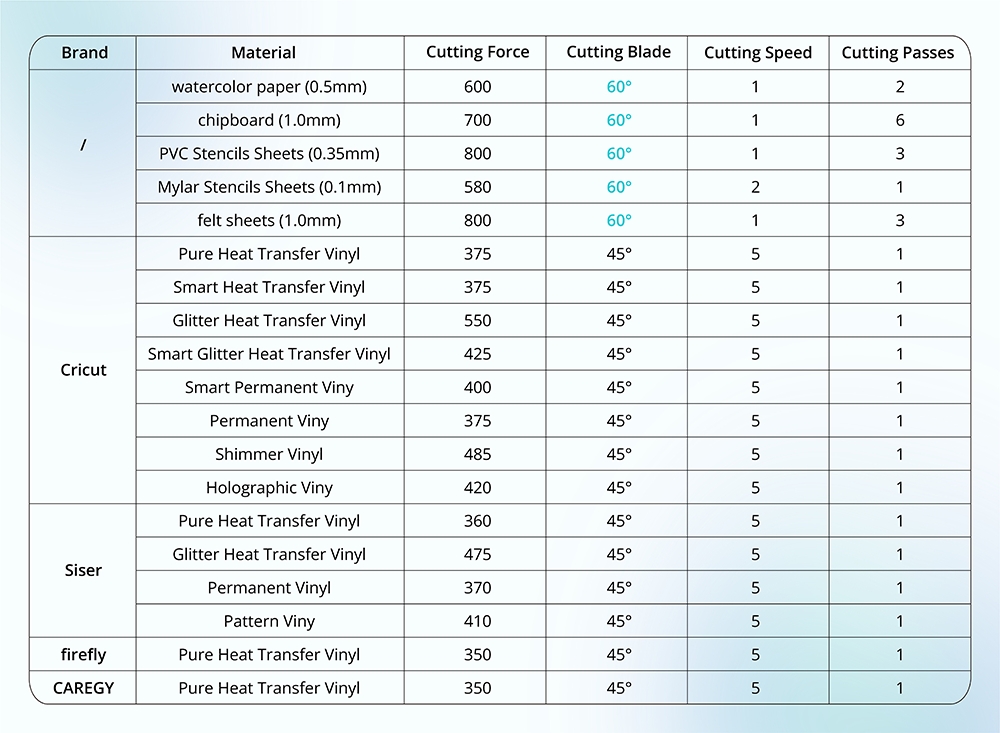
Please refer to the chart below for more cutting settings. If you cannot find your material below, try a test cut with a similar material setting. The maximum cutting thickness for the LOKLiK Crafter is 1.0mm. The maximum thickness varies depending on the rigidness and thickness of the materials. If you cannot cut through the material under maximum pressure, try to cut more times.

Material Settings Chart
Additional Settings

Leave a comment

When Should You Use a Teflon Sheet? Heat Press Advanced Guide

When Should You Use a Teflon Sheet? Heat Press Advanced Guide

Tia Isom

When to use a Teflon sheet in heat press projects—and when to keep it away. Essential for DTF curing, puff HTV, delicate fabrics; never use on tumbler or phone case...

How to Wash DTF Shirts and Keep That Soft, Rubbery Feel

How to Wash DTF Shirts and Keep That Soft, Rubbery Feel

Tia Isom

Learn how to wash and care for DTF printed shirts to prevent cracking, peeling, and fading. This guide covers proper washing techniques, drying methods, and common problems like wrinkling and...

How to Price HTV, Sublimation, DTF, Embroidery & Laser Crafts in 2026

How to Price HTV, Sublimation, DTF, Embroidery & Laser Crafts in 2026

Tia Isom

Pricing guide for five decoration methods — HTV, sublimation, DTF, embroidery, and laser engraving. Includes the core pricing formula, 2026 blank cost reference, labor estimates, equipment depreciation, and cross-method profit...

DIY Apparel Printing in 2026: Which Method Makes the Most Money?

DIY Apparel Printing in 2026: Which Method Makes the Most Money?

Tia Isom

Compares four DIY apparel printing methods — HTV (starter-friendly, $15–30), DTF (high-volume, $20–50), sublimation (sportswear, $25–60), and embroidery (premium, $30–100). Includes startup costs, selling prices, and 2026 market trend analysis...

What Is Sublimation Paper Used For

What Is Sublimation Paper Used For

Tia Isom

Sublimation paper uses guide: polyester apparel (T-shirts, jerseys), coated drinkware (mugs, tumblers), hard goods (puzzles, coasters), promotional products, and what NOT to use it on.

What is the best sublimation paper

What is the best sublimation paper

Tia Isom

Best sublimation paper guide: compare A-SUB, Siser, HTVRONT, Beaver Paper by ink release (90-99%), drying speed, price ($0.11-$0.50/sheet), and choose based on your needs and budget.

Back-to-School DIY with the A100 Multi Heat Press: Custom Sashes, Shirts, Hats & More

Back-to-School DIY with the A100 Multi Heat Press: Custom Sashes, Shirts, Hats & More

Tia Isom

Ready for the first day of school? With the HTVRONT A100 Multi Heat Press, you can create personalized sashes (video tutorial included!), matching shirts, custom hats, teacher mugs, and no-lost...

How to Wash HTV Shirts So They Never Peel or Fade: The Complete Guide

How to Wash HTV Shirts So They Never Peel or Fade: The Complete Guide

Tia Isom

This guide covers everything you need to know about washing and caring for HTV shirts. From the crucial 24‑hour waiting period after pressing to the best detergent and drying practices,...

Read More >>
How to Use Auto Heat Press 2

How to Use Auto Heat Press 2

Tia Isom

Your browser does not support the video tag. Watch the tutorial and discover how the HTVRONT Auto Heat Press 2 simplifies your heat transfer projects with its automatic features and...

What is A100 Auto Multi Heat Press

What is A100 Auto Multi Heat Press

Tia Isom

The HTVRONT A100 Auto Multi Heat Press is an all-in-one 3-in-1 automatic heat press. With its tool-free quick-swap design, it handles flat press (T-shirts), hat press (caps), and tumbler press...

How to Heat Press Shirts with A100 Auto Multi Heat Press

How to Heat Press Shirts with A100 Auto Multi Heat Press

Tia Isom

The HTVRONT A100 Auto Multi Heat Press is a 3-in-1 automatic heat press with tool-free quick-swap design for flat press, hat press, and tumbler press. This tutorial shows you how...